






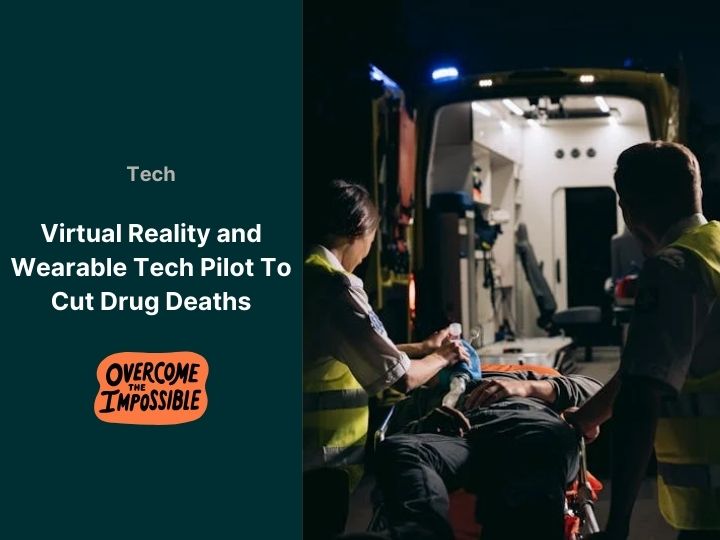
The UK government is stepping up its efforts to address the country’s drug crisis with a groundbreaking approach. Through a new initiative involving wearable technology, virtual reality (VR), and artificial intelligence (AI), the government aims to save lives by supporting individuals struggling with drug addiction. As part of the Addiction Healthcare Goals programme, £12 million has been awarded to innovative projects nationwide, with the potential to transform addiction treatment across the UK.
How New Technology Can Save Lives
 These projects focus on developing tools to detect overdose risks early and help people access lifesaving treatment. One example is PneumoWave ALERT , which combines a wearable chest sensor with a mobile app. This sensor monitors the user’s breathing and immediately sends an alert to nearby emergency responders or trained antidote carriers if it detects an overdose. Working closely with King’s College London, the University of Dundee, and other partners, this project is set to be tested on high-risk individuals in homeless accommodations, marking a significant step in making opioid use safer. In another project, researchers at King’s College London are pioneering a new form of naloxone wafer , a mouth-dissolvable version of the life-saving drug. Typically administered as an injection or nasal spray, naloxone is used to reverse heroin or opioid overdoses, but access barriers often delay its use. This wafer offers a quicker, more portable solution, fitting conveniently in a wallet or purse.
A Closer Look at Wearable Technology
Wearable tech is at the heart of this initiative. Among the projects is a “Saving Sam” wristband, developed by eMoodie , which monitors key indicators like blood oxygen levels, heart rate, body temperature, and movement. If these indicators suggest an overdose, the device sends an alert to a trusted contact, potentially saving lives by providing rapid support. In Scotland, NOMW Health is advancing its LifeSavr wearable, which monitors oxygen saturation, respiratory rate, and heart rate. This self-contained device was originally tested for feasibility and now enters a new phase aimed at refining its design for more extensive use, including markets beyond the UK.
Breaking the Cycle of Addiction with Virtual Reality
 A fresh approach to addiction recovery focuses on helping people overcome their triggers. In partnership with King’s College London, researchers are creating a VR-based cue exposure treatment to help people dealing with cocaine addiction. By wearing watch-like devices that measure physical changes, researchers can track when cravings occur and expose users to realistic trigger scenarios in a safe VR environment. This exposure therapy aims to build resilience against triggers, lowering the chances of relapse.
A Collaborative Effort Across the UK
This tech-driven initiative falls under the Reducing Drug Deaths Challenge and the NIHR i4i Addiction: Innovation for Treatment and Recovery Awards , backed by partners like the Scottish government and the National Institute for Health and Care Research (NIHR). These projects are an example of the UK government’s dedication to using innovative technology for preventive healthcare. With successful trials, the best-performing solutions could see broader implementation, helping the NHS incorporate more effective addiction support.
A Bright Future for Addiction Treatment and Recovery
The Addiction Healthcare Goals programme doesn’t just fund projects. It also aims to train new research leaders and make addiction healthcare data more accessible to researchers. By bringing together experts across sectors, the programme seeks to transform addiction treatment on a national scale. For more information on these projects, check out NIHR publications and Scottish Government publications.